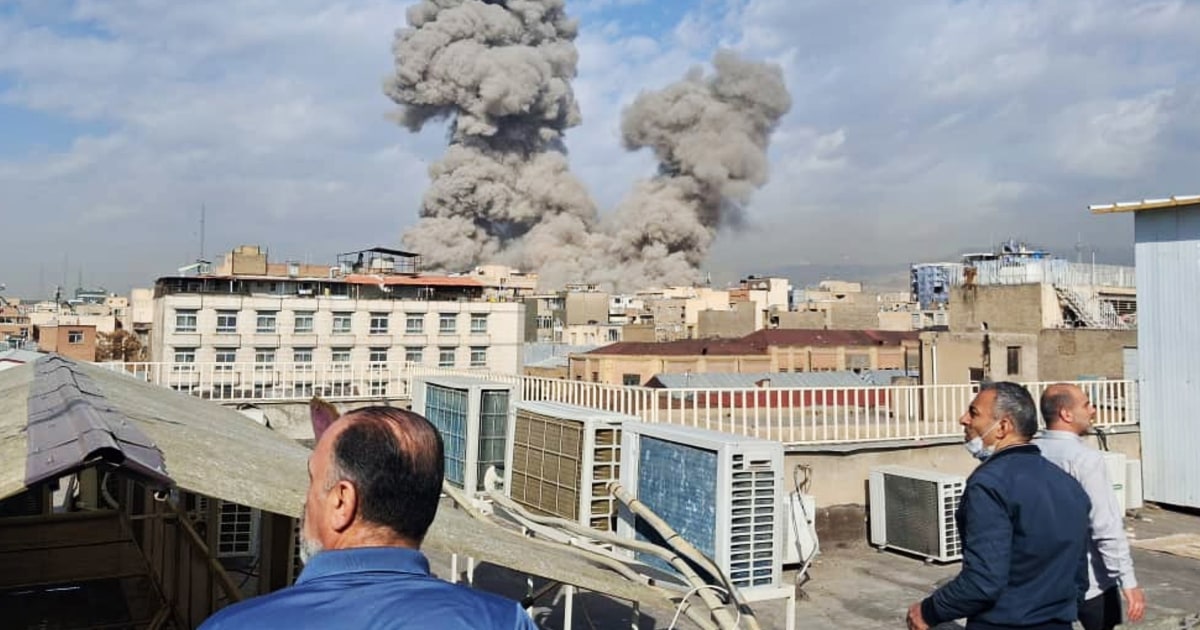
The Unprecedented Announcement: Khamenei Dead in US-Israel Strikes
In a development that has sent shockwaves across the globe, Iran's Supreme Leader Ayatollah Ali Khamenei has been confirmed dead following a significant U.S. and Israeli military operation. The announcement, initially made by President Trump and corroborated by multiple Israeli official sources and a senior U.S. intelligence official, marks a pivotal moment in Iranian and Middle Eastern history. The news, later confirmed by Iranian state media, including IRNA and Tasnim, has ignited speculation about the future trajectory of the Islamic Republic.
President Trump described Khamenei as "one of the most evil people in History" in a public statement, adding that the U.S. government was "hearing that many of their IRGC, Military, and other Security and Police Forces, no longer want to fight, and are looking for Immunity from us." He also indicated that "heavy and pinpoint bombing" would continue as necessary to achieve "PEACE THROUGHOUT THE MIDDLE EAST AND, INDEED, THE WORLD!" The Israel Defense Forces further confirmed that seven Iranian officials and commanders, including Ali Shamkhani, an adviser to Khamenei, were killed in the strikes.
The immediate aftermath saw contrasting reactions. While President Trump asserted that Khamenei had "killed many people" and "destroyed a country," a CBS News producer in Tehran reported widespread cheering in the streets, suggesting a segment of the Iranian populace welcomed the news. Israeli Prime Minister Benjamin Netanyahu was reportedly shown a photo of Khamenei's body, underscoring the direct involvement and significant implications for regional dynamics. This sudden end to a decades-long rule signals the beginning of an uncertain, yet undoubtedly transformative, era for Iran after Khamenei's death.
Khamenei's Enduring Legacy: An Iron Grip and a Complex Rule
Ayatollah Ali Khamenei, who was 86 at the time of his death, had presided over Iran with an iron grip for 36 years, serving as Supreme Leader since 1989. He succeeded Ayatollah Ruhollah Khomeini, the architect of the 1979 Iranian revolution, inheriting and meticulously consolidating vast power. His rule saw him controlling all branches of the government and the military, positioning him not only as the nation's political head but also its spiritual leader, accountable only to God within Iran's unique hierarchical structure.
Khamenei's leadership was characterized by a staunch anti-U.S. stance and a calculated expansion of Iran's military and political influence across the Middle East. Domestically, his tenure was marked by the ruthless suppression of political dissent and a pragmatic approach to maintaining loyalty among the powerful and often competing factions within his nation. He was known to turn a blind eye to corruption and abuse among those he relied on, most notably the Islamic Revolutionary Guard Corps (IRGC), which became a cornerstone of his power and a key instrument in enforcing an Islamic regime that, for many Iranians, no longer reflected their aspirations. Sanam Vakil, director of the Middle East and North Africa Program at London's Chatham House think tank, described Khamenei as "a bit of a pragmatist," understanding that "for this system to survive, you need loyalty and you need loyalists."
Born in Mashhad, Khamenei's early life included extensive education at Islamic seminaries, where he studied under Khomeini. His long and dominant rule built Iran into a formidable regional player, albeit one often isolated on the international stage. His death thus closes a significant chapter, ending an era defined by his singular authority and steadfast commitment to Iran's revolutionary ideals, while simultaneously raising profound questions about the future of a nation at a crossroads. For more details on his extensive tenure, refer to Ayatollah Ali Khamenei Dead: End of Iran's 36-Year Iron Grip.
Navigating the Power Vacuum: The Battle for Succession in Iran
The sudden and dramatic demise of Ayatollah Ali Khamenei leaves Iran facing an unprecedented power vacuum and an immediate, pressing question: who will succeed him? In Iran's complex system, the Supreme Leader is not directly elected by the people but is selected by the Assembly of Experts, an 88-member body of high-ranking clerics. This process, traditionally shrouded in secrecy and backroom negotiations, now assumes critical importance.
The challenge of succession is magnified by several factors:
- Lack of a Clear Successor: Unlike the transition from Khomeini to Khamenei, there is no apparent heir apparent with universal support among the ruling elite. Potential candidates have often been debated, but none commanded the same level of authority or widespread loyalty as Khamenei did.
- Internal Factionalism: Iranian politics is notoriously complex, characterized by various hardline, reformist, and conservative factions vying for influence. Khamenei, for decades, masterfully balanced these groups to maintain stability. His absence could unleash fierce competition and potentially destabilize the political landscape.
- The Role of the IRGC: The Islamic Revolutionary Guard Corps is a state within a state, possessing significant economic, military, and political power. Their allegiance and actions will be crucial during the transition. President Trump's remarks about IRGC members seeking immunity suggest potential cracks in their loyalty, which could further complicate the power dynamics.
- Public Sentiment: The reports of cheering in Tehran's streets underscore a deep-seated desire for change among certain segments of the population. A protracted or contentious succession process could embolden public dissent and calls for greater political freedoms, potentially leading to widespread unrest.
The selection of the next Supreme Leader will be a defining moment, determining whether Iran maintains its current trajectory or embarks on a new path. The process will test the resilience of Iran's political institutions and the unity of its ruling class. For a deeper dive into this critical period, explore Iran After Khamenei: The Battle for Succession Post-Leader's Death.
Geopolitical Ramifications: A Shifting Middle East Landscape
The death of Iran's Supreme Leader in US-Israel strikes carries profound geopolitical implications, potentially reshaping the balance of power across the Middle East and beyond. Khamenei's strong anti-Western stance and his role in cultivating a network of proxy forces had made Iran a central, often confrontational, player on the international stage.
Key areas where the impact will be felt include:
- US-Iran Relations: President Trump's strong statements and the direct military action signal a hardline approach. The continuation of "heavy and pinpoint bombing" suggests ongoing pressure. The future of any diplomatic engagement, including discussions around Iran's nuclear program, remains highly uncertain. A new leader might either seek de-escalation or double down on confrontation, depending on internal power dynamics.
- Israel and Regional Security: Israel's direct involvement in the strikes underscores its deep concern over Iran's regional influence and nuclear ambitions. Khamenei's demise removes a long-standing adversary, but could also lead to a period of heightened regional volatility as different actors test the new leadership in Tehran. Proxy conflicts in places like Yemen, Syria, and Lebanon could see shifts as Iran's support structure potentially changes.
- Stability of the Middle East: Iran's role as a powerful anti-U.S. force has been a major factor in regional instability. While the removal of Khamenei might be seen by some as an opportunity for peace, the immediate future could involve significant turbulence as the balance of power shifts. Other regional players, including Saudi Arabia and the UAE, will be closely watching how the situation unfolds.
- Global Energy Markets: Any significant instability in Iran, a major oil producer, could impact global energy prices and supply chains, drawing attention from international economic powers.
The absence of Khamenei removes a central figure who for decades steered Iran's foreign policy and strategic decisions. What comes next depends heavily on who emerges as his successor and what direction they choose for the Islamic Republic in the international arena.
What Comes Next for Iran? Scenarios and Key Indicators to Watch
The reported death of Khamenei marks an undeniable turning point for Iran, ushering in a period of intense scrutiny and potential transformation. While predicting the exact trajectory is challenging, several scenarios and key indicators will dictate the nation's path forward:
- Consolidated Continuity: In this scenario, the Assembly of Experts, perhaps with strong influence from the IRGC and powerful clerical factions, swiftly appoints a successor who largely maintains Khamenei's policies and the current power structure. This would aim for stability and signal resistance to external pressure.
- Internal Power Struggles: The sudden void at the top could trigger a prolonged and potentially public struggle between various factions—hardliners, reformists, the IRGC, and influential clerical families. This could lead to political paralysis, infighting, and a period of instability within the regime.
- Heightened Public Mobilization: The reported cheering in Tehran suggests a segment of the population might be emboldened by Khamenei's death. If a successor is perceived as weak or illegitimate, or if the political vacuum persists, mass protests and calls for more fundamental change could erupt, posing a significant challenge to the existing order.
- Shift in Foreign Policy: A new leader, depending on their background and political allegiances, might steer Iran's foreign policy in a different direction. This could range from seeking renewed engagement with the West to an even more aggressive regional posture.
Key Indicators to Watch:
- The Speed and Nature of Succession: A quick, seemingly unified selection suggests regime stability. A protracted, contested process signals deep divisions.
- The Public Reaction: Continued public demonstrations or significant shifts in public discourse will indicate the level of internal pressure for change.
- IRGC's Actions: The Revolutionary Guard's role in maintaining internal security and external influence will be critical. Any signs of internal dissent or changing loyalties within the IRGC would be highly significant.
- International Diplomacy: How world powers (particularly the US, EU, China, and Russia) engage with the new leadership will shape Iran's integration or isolation on the global stage.
The death of Ayatollah Ali Khamenei in US-Israel strikes marks the end of a powerful and defining era for Iran. His 36-year "iron grip" shaped not only domestic policy but also Iran's formidable anti-U.S. posture and its extensive regional influence. As Iran grapples with the unprecedented challenge of succession, the world watches intently. The path forward is fraught with uncertainty, balancing the potential for continuity with the possibility of profound internal shifts and significant geopolitical realignments. The coming weeks and months will be pivotal in determining what this moment truly means for Iran and, indeed, for the wider Middle East.