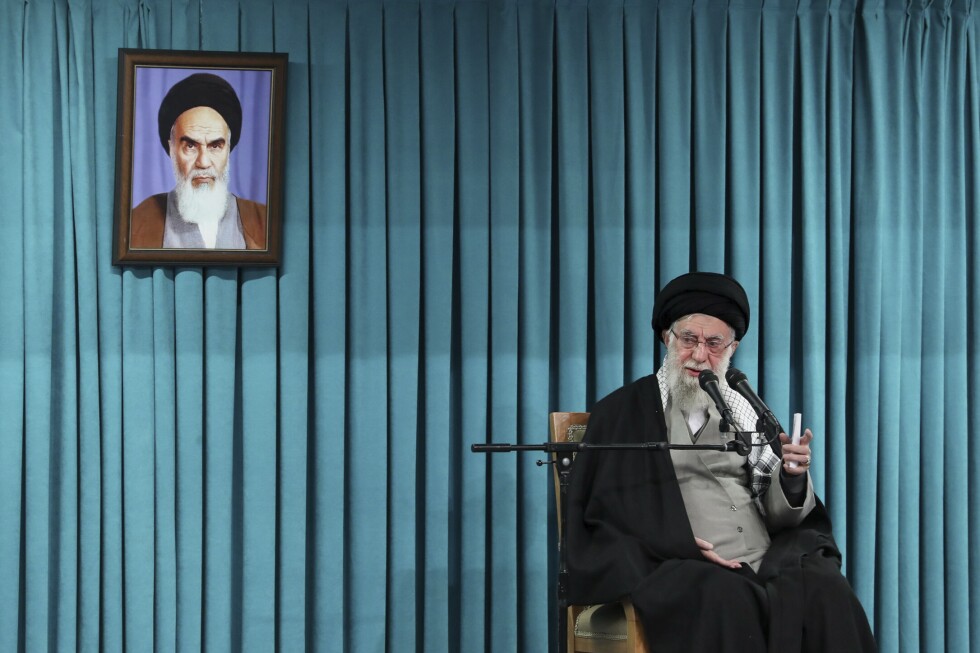
Iran After Khamenei: The Battle for Succession Post-Leader's Death
The geopolitical landscape of the Middle East, and indeed the world, has been dramatically reshaped by the confirmed death of Iran's Supreme Leader, Ayatollah Ali Khamenei. His demise, following a massive U.S. and Israeli military operation, as announced by President Trump and corroborated by Israeli and U.S. intelligence sources, marks the end of an era. With Iranian state media also reporting the leader's passing, the focus now intensely shifts from Khamenei's powerful, nearly four-decade-long rule to the tumultuous and uncertain path of succession. The death of such a central figure inevitably creates a significant power vacuum, triggering what is expected to be an intense and complex battle for control in a nation already fraught with internal dissent and external pressures.
The End of an Iron Grip: Khamenei's Legacy and Iran's Trajectory
Ayatollah Ali Khamenei, aged 86, had served as Iran's Supreme Leader since 1989, succeeding Ayatollah Ruhollah Khomeini, the architect of the 1979 revolution. For 35 years, he wielded absolute authority, controlling every branch of the government and the military, and serving as the nation's spiritual leader. His rule was characterized by an iron fist at home, brutally suppressing political dissent and overlooking widespread corruption and abuses within the powerful Islamic Revolutionary Guard Corps (IRGC) and other security forces. Internationally, he forged Iran into a formidable anti-U.S. force, expanding its military influence across the Middle East.
Despite his immense power, Khamenei was often described as being a "hostage to the powerful and competing political factions" within his nation. Yet, he masterfully navigated these treacherous waters, securing the loyalty of key players for over three decades, ensuring the survival of an Islamic regime that, by many accounts, a majority of Iranians no longer desired. This intricate web of loyalties and power-sharing arrangements, which Khamenei meticulously maintained, is now shattered, creating an unprecedented level of instability. For more insights into the immediate aftermath, read
Ayatollah Ali Khamenei Dead: End of Iran's 36-Year Iron Grip.
Immediate Aftermath and Global Reactions
The news of Khamenei's death sent shockwaves globally. President Trump's immediate public statement described Khamenei as "one of the most evil people in History" and highlighted intelligence suggesting that many within Iran's IRGC, Military, and other Security and Police Forces were "looking for Immunity from us." This unprecedented claim suggests a potential fracturing within Iran's security apparatus, adding another layer of complexity to the succession crisis. The heavy and pinpoint bombing, continuing throughout the week as stated by President Trump, underscores the military context of Khamenei's demise and its potential to further destabilize the region.
Domestically, the reactions were starkly divided. While Iranian state media confirmed the death, CBS News producers in Tehran reported scenes of people cheering in the streets, indicative of the deep-seated resentment many Iranians felt towards his regime. The confirmation by an Israeli broadcaster that Prime Minister Benjamin Netanyahu had been shown a photo of Khamenei's body further highlighted the geopolitical significance of the event, emphasizing the role of external actors in this dramatic shift. The immediate impact and what it means for the region are further explored in
Khamenei Killed in US-Israel Strikes: What It Means for Iran.
The Succession Conundrum: Mechanisms and Potential Candidates
The question of "who will succeed" Khamenei is now paramount. In Iran's unique political structure, the Supreme Leader holds ultimate authority, answering to no one but God. However, the process of succession is technically governed by the Assembly of Experts, an 88-member body of high-ranking clerics. This assembly is responsible for selecting the next Supreme Leader from among qualified candidates, based on criteria such as religious scholarship, political acumen, and administrative experience.
However, the reality of Iranian power politics is far more complex than formal procedures suggest. Several factors complicate the process:
- Lack of a Pre-Anointed Successor: Unlike Khomeini, who arguably groomed Khamenei to some extent, no clear successor had been publicly or privately elevated by Khamenei himself.
- Competing Power Centers: The powerful IRGC, the traditionalist clerical establishment, and various political factions (hardliners, conservatives, and remnants of pragmatic conservatives) will all vie for influence in selecting the next leader.
- Internal Divisions: The reports of security forces seeking immunity suggest a potential for internal fracturing, which could empower certain factions or lead to open dissent.
- External Pressures: The U.S. and Israeli military operations, coupled with President Trump's strong rhetoric, will undoubtedly influence the calculations of internal players.
Potential candidates generally fall into two broad categories:
- Hardline Clerics: Individuals with strong revolutionary credentials, close ties to the IRGC, and a commitment to Khamenei's anti-Western stance. These candidates would likely seek to maintain the existing system with minimal changes.
- Pragmatic Conservatives: Clerics who, while adhering to the principles of the Islamic Republic, might be more open to domestic reforms or a different approach to international relations, particularly if internal dissent continues to mount.
The selection will not simply be based on religious merit but on who can command the loyalty of the IRGC, maintain stability, and navigate the country's severe economic and social challenges.
The Battle for Iran's Future: Scenarios and Stakes
The death of Khamenei opens up several potential scenarios for Iran's future, each with profound implications for its people and global stability:
*
Consolidation of Hardline Power: The most immediate possibility is that the most powerful hardline factions, particularly the IRGC, will quickly move to install a successor who can ensure the continuity of the existing system and protect their vested interests. This would likely mean a continued policy of internal suppression and external confrontation.
*
Internal Instability and Power Struggles: Without a clear, universally accepted successor, intense infighting among the clerical establishment, the IRGC, and other political groups could erupt. This could manifest as covert maneuvering, public disputes, or even localized confrontations.
*
Increased Public Uprising: The cheering in Tehran suggests a public eager for change. A power vacuum, combined with continued economic hardship and political repression, could ignite widespread protests, challenging the very legitimacy of the Islamic Republic.
*
Shift Towards Pragmatism (Less Likely in the Short Term): While less probable given the current climate, a successor sensitive to the deep public discontent and the country's isolation might attempt a more pragmatic approach, both domestically and internationally. This would be a high-risk strategy, potentially alienating powerful hardline elements.
The stakes for the *khamenei dead iran* scenario are incredibly high. For Iran, it's a question of internal cohesion, economic survival, and its future political direction. For the Middle East, it could mean either intensified regional proxy conflicts or, potentially, a pathway to de-escalation depending on the new leadership's policies. For the international community, particularly the U.S. and Israel, it presents both challenges and opportunities regarding Iran's nuclear program, human rights record, and role as a state sponsor of terrorism.
Conclusion: A New Chapter for Iran
The passing of Ayatollah Ali Khamenei marks a pivotal moment in Iran's modern history. His nearly four decades of unwavering leadership, characterized by an unyielding grip on power and a confrontational stance towards the West, have come to an end amidst dramatic military action. The ensuing battle for succession is not merely about choosing a new leader; it is a profound struggle over the very identity and future direction of the Islamic Republic. As the world watches, the outcome of this power struggle will determine whether Iran transitions into a new era of reform and potential reconciliation or entrenches itself further in authoritarianism and regional instability. The path ahead for Iran after Khamenei is shrouded in uncertainty, promising a period of intense political maneuvering and potentially significant societal shifts.