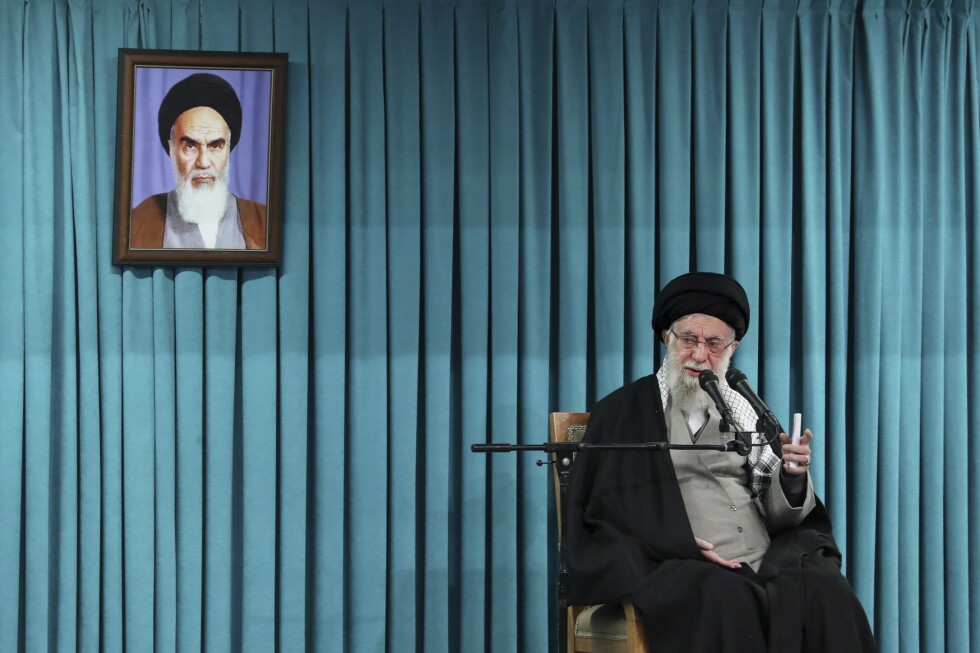
The world awoke to seismic news this Saturday as reports confirmed the death of Ayatollah Ali Khamenei, Iran's Supreme Leader, at the age of 86. His demise, reportedly the result of a massive U.S. and Israeli military operation, marks the dramatic end of a 36-year rule that profoundly shaped Iran and its relationship with the global community. The passing of Khamenei, an emblematic figure of the Islamic Republic, not only closes a significant chapter in Iranian history but also ushers in an era of profound uncertainty for a nation long held under his unyielding iron grip.
The End of an Era: Khamenei's 36-Year Reign
Ayatollah Ali Khamenei ascended to the supreme leadership in 1989, succeeding Ayatollah Ruhollah Khomeini, the founder of the Islamic Revolution. For over three and a half decades, he consolidated immense power, effectively controlling all branches of the Iranian government and military, while serving as the nation's spiritual guide. His reign was characterized by a relentless drive to build Iran into a formidable anti-U.S. force, extending its military and ideological influence across the Middle East, from Syria to Yemen, Lebanon to Iraq. Domestically, Khamenei's rule was synonymous with an iron fist, ruthlessly crushing repeated waves of unrest and dissent.
Despite his absolute authority, Khamenei was also, in a paradoxical sense, a hostage to the powerful and often competing political factions within Iran. Yet, against significant odds, he skillfully navigated these treacherous waters, securing the loyalty of key players for decades. This loyalty, however, came at a cost: it enabled him to enforce an Islamic regime that, by many accounts, the majority of Iranians no longer desired. He consistently backed the brutal suppression of political opposition and turned a blind eye to widespread corruption and abuse, particularly within the powerful Islamic Revolutionary Guard Corps (IRGC), the very institution he relied upon most to maintain control.
Analysts like Sanam Vakil of Chatham House often described Khamenei as a "pragmatist," one who deeply understood the distribution of power and the necessity of cultivating unwavering loyalty for the system's survival. This pragmatic approach, combined with his strategic acumen, allowed him to maintain stability in a highly volatile region, albeit through methods that drew consistent international condemnation for human rights abuses and destabilizing actions.
A Strike Heard Around the World: How the News Unfolded
The news of Khamenei's death broke with startling speed, beginning with an announcement from U.S. President Donald Trump on Saturday. Trump declared that Ayatollah Ali Khamenei, whom he labeled "one of the most evil people in History," had been killed in a "massive U.S. and Israeli military operation." This statement was swiftly corroborated by multiple Israeli official sources and a senior U.S. intelligence official who confirmed the news to CBS News.
President Trump's public pronouncements on social media included further explosive claims, noting that the U.S. government was "hearing that many of their IRGC, Military, and other Security and Police Forces, no longer want to fight, and are looking for Immunity from us." He emphasized that the "heavy and pinpoint bombing" would continue "uninterrupted throughout the week or, as long as necessary to achieve our objective of PEACE THROUGHOUT THE MIDDLE EAST AND, INDEED, THE WORLD!"
Iranian state media, including the state-run IRNA news agency and the semi-official Tasnim news agency (associated with the IRGC), later confirmed that Khamenei is dead, though they did not elaborate on his cause of death. An Israeli broadcaster further reported that Prime Minister Benjamin Netanyahu had been shown a photo of Khamenei's body. The immediate public reaction within Iran was starkly divided: while official statements mourned, a CBS News producer in Tehran reported widespread cheering in the streets, a testament to the deep-seated grievances many Iranians held against the deceased leader.
The Israel Defense Forces (IDF) also held a press conference, announcing that the strikes had resulted in the deaths of seven Iranian officials and commanders, including Ali Shamkhani, a prominent adviser to Khamenei. These details painted a clear picture of a targeted and highly impactful military action that decapitated a significant portion of Iran's top leadership.
Legacy of an Iron Fist: Khamenei's Impact on Iran and the Middle East
The death of Ayatollah Ali Khamenei reverberates far beyond Iran's borders. His 36-year rule fundamentally reshaped the Middle East, establishing Iran as a regional hegemon determined to challenge American and Israeli interests. He oversaw the development of a complex network of proxy forces, including Hezbollah in Lebanon, various militias in Iraq and Syria, and the Houthis in Yemen, effectively projecting Iranian power and influence across the Levant and the Arabian Peninsula. This expansion often brought the region to the brink of wider conflict.
At home, Khamenei's legacy is one of unwavering resolve to maintain the Islamic Republic's ideological purity, often at the expense of human rights and economic prosperity. Under his leadership, political dissent was met with brutal force, and the country's youth, in particular, chafed under strict social restrictions and economic stagnation. His reign was also marred by persistent international disputes over Iran's nuclear program, which continued to fuel tensions with Western powers and Israel.
Uncertainty and the Road Ahead for Iran
With Khamenei dead, Iran faces an unprecedented leadership vacuum. The Supreme Leader was not merely a political head but also a spiritual guide, a figure of immense moral and religious authority. There is no clear, pre-anointed successor, leading to immediate speculation about who will fill this pivotal role. The complex and often opaque process of succession, involving the Assembly of Experts, will undoubtedly be fraught with internal power struggles among the powerful factions Khamenei had so carefully balanced for decades. The future leadership will inherit a nation grappling with widespread public discontent, a fragile economy, and intense regional and international pressures.
The fate of the IRGC, the bedrock of Khamenei's power and a key instrument of Iran's foreign policy, is also a critical question. Reports of IRGC and other security forces seeking immunity suggest potential cracks within the regime's loyalist core, which could have profound implications for domestic stability and Iran's projection of power abroad. The U.S. and Israeli objectives, stated as achieving "peace throughout the Middle East and, indeed, the world," indicate a strategic aim to dismantle the infrastructure of Iranian influence and aggression that Khamenei meticulously built. To delve deeper into the intricate political landscape that emerges, consider exploring Iran After Khamenei: The Battle for Succession Post-Leader's Death.
Navigating the Post-Khamenei Landscape: Tips and Considerations
The sudden removal of Ayatollah Ali Khamenei from the helm of Iran presents a paradigm shift with far-reaching consequences. For international observers, policymakers, and those with an interest in regional stability, understanding the immediate aftermath and future trajectory is crucial. Here are some key considerations:
- Monitor Internal Power Dynamics: The succession process will be highly contentious. Watch for signals from key institutions like the Assembly of Experts, the IRGC, and various clerical factions. The new leader's identity will dictate much of Iran's future path.
- Assess Regional Repercussions: Iran's proxy networks across the Middle East are central to its foreign policy. Any changes in leadership or internal stability could lead to shifts in the behavior of these groups, impacting conflicts in Syria, Yemen, Iraq, and the security of Israel and Gulf states.
- Observe Public Reaction: The cheering in Tehran streets suggests a deep desire for change among segments of the population. Observe how the populace reacts to the transition period and whether new protests emerge, challenging the incoming leadership.
- Evaluate Nuclear Program Status: The future of Iran's nuclear ambitions will be a major test for the new regime and a critical point of focus for international diplomacy. Any deviation from past policies could significantly alter regional security dynamics.
- Consider Economic Implications: Sanctions and internal mismanagement have heavily impacted Iran's economy. The new leadership will face immense pressure to address these issues, potentially leading to policy changes that could affect global energy markets and international trade.
The death of a leader as central as Ayatollah Ali Khamenei fundamentally alters the geopolitical chessboard. For a detailed breakdown of what this monumental event signifies for the nation and the broader region, read Khamenei Killed in US-Israel Strikes: What It Means for Iran.
The demise of Ayatollah Ali Khamenei after 36 years as Iran's Supreme Leader marks a pivotal moment in modern history. His long, often brutal, rule profoundly shaped Iran's domestic landscape and its assertive posture on the international stage. As the nation navigates the uncharted waters of a post-Khamenei era, the world watches with bated breath to see who will emerge to guide Iran, and what path the Islamic Republic will forge without the man who held its iron grip for nearly four decades.